Blog

  • How to find Home Leaks: Where They Come From

    We all know that water is a precious resource, and it can be difficult to imagine how we might take care of our homes without the use of this valuable natural resource. Home leaks are common and can lead to high levels of water wastage because they often go unnoticed or unaddressed for long periods of time. In this article I will discuss where home leaks come from, as well as some simple ways to detect them in your own home.

    Meterwater-meter-how-to-check

    Water meters can often detect large leaks or even a combination of smaller leaks. You can conduct a simple leak check using your water meter by following these steps:

    1. Turn off all water inside and outside the home. This test must be performed when no automatic equipment is used such as clothes washers, dishwashers, sinks, etc.
    2. The status of the water meter is recorded. Wait 15 minutes and ensure no one uses water during this interval.
    3. Record the status of your water meter again. If it appears that water was used during the test, then it is possible you have a leak in your home. Verify small appliances like water filters or whole house humidifiers did not cause a false positive.

    The meter test can only verify large leaks. It cannot confirm that small, undetectable leaks do not exist within your home. Even if the tests catch a leak, it won’t tell you where they are coming from – further investigation is needed to locate them all!


    Water Supply Leak Lines

    supply-line-leakThe water supply line is usually buried at least 3 feet below ground and undetectable to the human eye. However, leaks in this pipe will sometimes travel back into a home’s pipes where they are difficult to spot because of their small size.

    If you notice your water meter box is full of unearned water, and that the cause isn’t a rainfall or irrigation run-off, chances are it’s leaking from somewhere in the supply line. One common exit point for these leaks could be where the pipe rises above ground level and enters your dwelling place. If there seems to always be damp soil at these locations, this might mean a leak has been sprung.

    In the event of a severe leak, water will seep up towards the surface and usually directly above where it is leaking underground. Most often, leaks between your meter and house are assumed to be on you while those from outside sources like meters or pipes leading in through them belong to the nearby water utility.

    It’s crucial that you call the water utility before any attempt to repair a leaky pipe. If they deem it your responsibility, go ahead and hire a professional plumber! You’ll avoid costly mistakes this way.


    Faucet, Tub, and Shower Leaks

    A leaking faucet can be a nuisance and expensive. The slow drip of a leaky faucet can be enough to waste 1,000 gallons per year if left unchecked.sink-leaking

    To repair a leaky faucet, you should first determine what type of faucet it is. There are four common types: the compression valve, ball-type valves, cartridge-style or ceramic discs found in most homes. These all require different repairs depending on their individual styles and complexity. It’s best to learn how to use tools like wrenches before tackling these minor home fixes yourself.

    Toilet Leaks

    Toilets are one of the most common sources of leaks in your home and usually go unnoticed because they are often quiet and hidden. Less than 6% of all residential toilets leak to some degree but large toilet leaks can be detected when the valve constantly emits a hissing or gurgling sound while not being used.


    Whole House Humidifier Leaks

    A whole-house humidifier is a device for moistening the air that circulates in your home. They are most often found in homes with forced-air central heating systems because these types of furnaces expel hot, dry air into space and this can cause problems like static electricity or skin itchiness. Whole-house humidifiers mitigate those issues by adding moisture to any room they’re installed in.

    A water supply is directly plumbed to the humidifier in order to provide a constant water supply for the humidifier. In case the humidifier refill valve fails to close, the humidifier has an overflow drain to the sewer that enable water leaks to occur months or even years before anyone notices. Therefore, it is important to regularly check the operation of your humidifier during cold weather and to shut down its water supply when turned off.


    Evaporative Cooler Leaks

    Evaporative coolers typically cool homes in arid climates and it uses water evaporation to cool warm air inside the home. They are frequently connected to the home water supply reservoir. The reservoir refill valve can fail to close which causes a consistent stream of water to leak out of the reservoir’s overflow line. These leaks can persist for months or years before finally being identified.

    The cooler can be easily checked for leaks by turning off the equipment and observing any water draining through the overflow line. If you find a leak, it’s usually an easy fix – simply replace your refill valve or recirculation pump.


    Pool and Fountain Leakspool-leaking

    A pool leak can be difficult to identify because the water is visible, but it’s not always easy to determine where a pool leak might originate. A fountain will also display signs of leaks, such as bubbling and spitting when operating. The potential sources for these leaks could include fittings or piping disconnects that are bent or loose which may need tightening.

    The filter may also need cleaning if the pressure is too high, which can create leaks through fittings and connections in the plumbing system. If you are unsure of a leak’s location, it’s best to call your pool professional or plumber for assistance.

  • Common Plumbing Emergencies and How to Deal with Them

    Many plumbing emergencies happen when you least expect them. This article will teach you how to deal with some of the most common plumbing emergencies such as a clogged toilet or a backed-up drain. We’ll also discuss what to do if your pipes burst, or if you can’t get water out of your faucet because there is too much sediment built up inside.

    Clogged Toilet

    clogged-toilet-leak


    If you have a clogged toilet, the first thing to do is figure out what’s in there. Are you sure it isn’t just poop? Here are some clues to help determine whether or not that might be the case: If your water level has dropped significantly (or if you’re running low on water), then it could be caused by a clogged toilet. The water level in the bowl will also decrease if there is a buildup of sediment or other debris blocking it from entering the drainpipe, and an increase in temperature may cause expansion that could lead to backups.

    You can fix a clogged toilet by pouring in a bucket of boiling water and letting it sit for 20 minutes. You can also use a plunger, though this may not work if the clogged object is made out of cloth or paper. If you’re unsure what’s causing your toilet to clog, then mix one-gallon bleach with one-quart warm water and pour that down the toilet. This will act as a disinfectant and kill any bacteria that may be clogging the pipe, so you’ll know if it’s caused by toilet paper or something more serious like diarrhea.

    After trying these remedies to no avail, then try using an auger to clear up the blockage. If this doesn’t work either, then call a professional.


    sink-backed-upBacked-Up Drain Pipe

    If you notice that your sink is backed up, then try to snake the drain. You can use an old-fashioned plunger or a plumber’s helper for this job. If these don’t work, then pour boiling water down the drain and wait at least 20 minutes before trying again. This will melt any ice caught in the pipes, which can be the cause of a backed-up drain.

    If this still doesn’t work, then you may need to call a plumber and have them snake your pipes with an auger or use other methods for clearing it out.


    Pipe Burst

    pipe-burst

    If you notice a pipe has burst, then try to turn off the main water supply before it leaks too much. You’ll want to shut down your water heater if possible, as well as any other appliances that use

    water so they don’t leak onto floors and cause more damage elsewhere in your home.

    Next, find out where the leak is coming from. If it’s not a pipe, then you’ll want to get the water stopped before it leaks too much and causes more damage elsewhere in your home. If it is coming from a pipe, then locate any shut off valves near there that can be quickly turned off so the leak doesn’t cause too much damage.

    You may also want to contact a plumber to come and fix the leak.


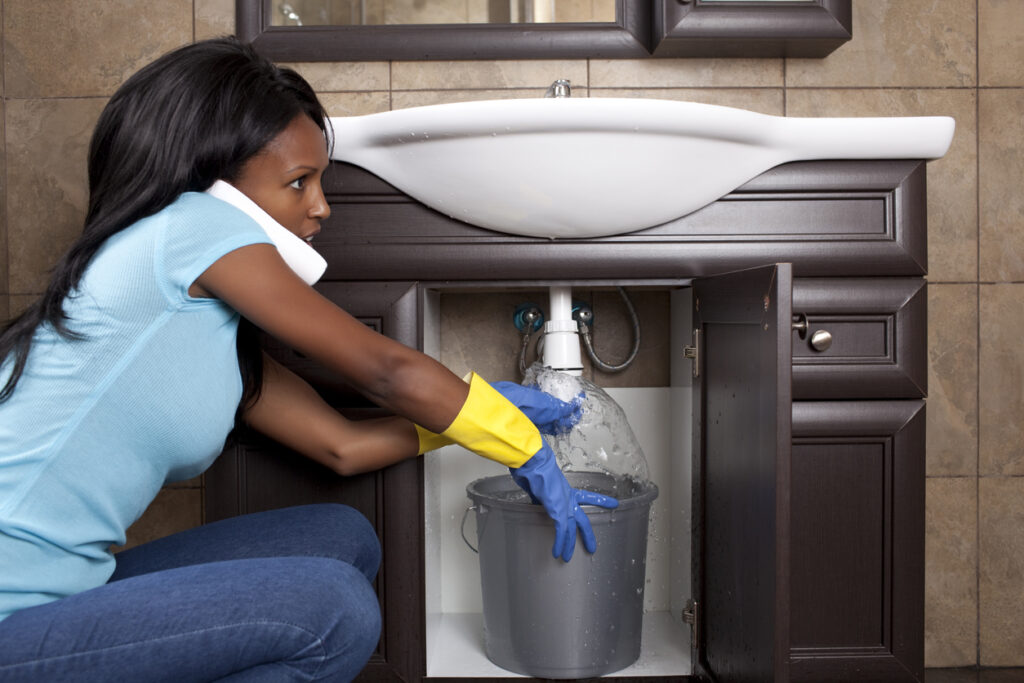
    faucet-leakingLeaky Fixture

    If a fixture is leaking, it’ll typically be obvious because there will either be water dripping from the area around the leak or you might see water coming up through the floor.

    The first step to fixing this problem is finding exactly where in your home that the leak is occurring. Once you know what room it’s in, then find and turn off the water supply to that room.

    If you don’t know where the shut-off valve is, then look for a diagram of your home’s plumbing system or call an expert and they should be able to find it quickly enough on their own.

    Once you’ve turned off the water, now use a sponge or towel soaked in baking soda to absorb all of the water coming out from under your sink or bathtub.


    Sewer BackupBroken-drain-pipe-leaking

    A sewer backup is when the sewage system in your house backs up into your toilet, sink, or bathtub. It can be caused by heavy rains causing water to seep through cracks and gaps in the pipes leading from your home’s sewer line out into the street.

    Sewer backups are more common in houses with high-level toilets and basins because these devices allow large amounts of water to flow at one time when they’re flushed or filled up.

    The first step you should do is turn off the water in the bathroom. Next, use a sponge or towel soaked in baking soda and vinegar to absorb all of the water coming out from under your sink or bathtub. If you can’t reach this area without standing on something slippery, like dish soap it’s best not to get off that surface. You should also call a plumber!


    leak-water-heater

    Water Heater Malfunction

    A water heater malfunction is usually the result of a faulty thermostat or heating element. The most common signs that your water heater might be on its way out are slow warm-up time, unbalanced hot and cold temperatures in any given room, and a constant need to reset the temperature setting. In some cases, it’s possible for an electric arc to develop inside the tank, which will produce a loud banging or hissing noise.

    If a water heater malfunction occurs, call a professional plumber to inspect and repair the unit.

  • How to find a Bathroom Leak?

    How to find a Bathroom Leak?

    Bathroom leaks are pretty common and are a great cause of concern for several households. What makes this problem peculiar is the fact that they may be pretty hard to detect. Moreover, if this leak occurs in a bathroom on the upper floor, it can cause a great deal of distress for the people living below. This article will be dedicated to guide you on how to find a Bathroom leak.

    Our professional team can help you find the issue and fix it quickly too.

    Turn the taps on and off

    Sometimes the leak is not evident, this is because we leave the bathroom after turning off the tap, and the water keeps leaking for a while. Turn on the tap for a while, the leaks may start showing immediately. If they don’t turn off the tap. You may notice drops of water still dripping. This is a clear sign of a water leak.

    Dry the Bathroom and inspect

    Dry up the bathroom in its entirety once. Keep it unused for a while, and then revisit to search for any wet spots or regions in the bathroom. If you find any, it would suggest that there is a water leak nearby, or on the exact spot.

    Revaluate old connections

    Make sure to check if all water connections are tight enough. Sometimes there is a leak and it may not be as evident, so keep a watch on old taps and connections, because they have a higher probability of leaking.

    Supply and drainage lines

    For supply, water comes continuously, while drainage occurs when you have used the bathroom. This suggests that the type of leak will help you determine if the leak is on the supply or the drainage pipes. Check the frequency: if the leak doesn’t stop at all, it is probably your lines of water supply that are faulty, and vice versa if they are irregular or discontinuous.

    Manual Touch Inspection

    The leak may be pretty small, that you may not be able to detect it with just your eyes, or would be likely to ignore it. When you use your hand, by running it across and over all the pipe lines, taps, traps, sinks and showers in the bathroom you may find some of it wet at some point. If and when you do so, that place has most likely the leak.

    Leakage within the ground

    Your leakage may be occurring at a place where you can hardly reach: within the walls, the ceiling, or the ground. Such leaks are the most problematic, since you may have to drill a hole in the wall to detect a leak, and it may cost quite a bit of money.

    Final Thoughts

    Although such an inspection can be done by yourself, it is probably best to get an expert, or a technician, unless you are really willing to learn how to do it on your own or cannot afford a plumber. Technicians are experienced and know how to find leaks properly. Once they do, it can deal with it on an immediate basis too.

    If you are still unable to find the issue, call us now and we will find and fix it for you.